HarpJam
Learn harmonica, play blues
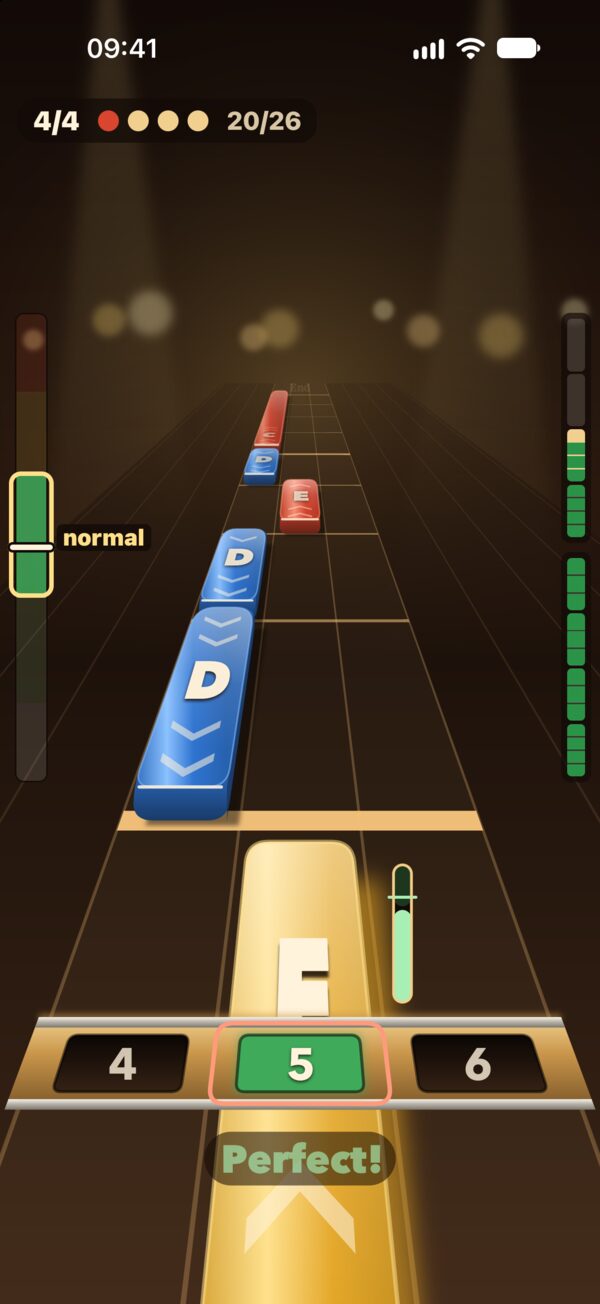
Pick up a C harmonica and play along with a band. HarpJam listens while you play: which hole, blow or draw, strong or soft, and shows you on the road how it went. Start with your first breaths, learn single notes and bends, then jam.
On iPhone, HarpJam is in a free public beta: install Apple's TestFlight app, then tap the button above. Tell us what you think, right in TestFlight or by email.
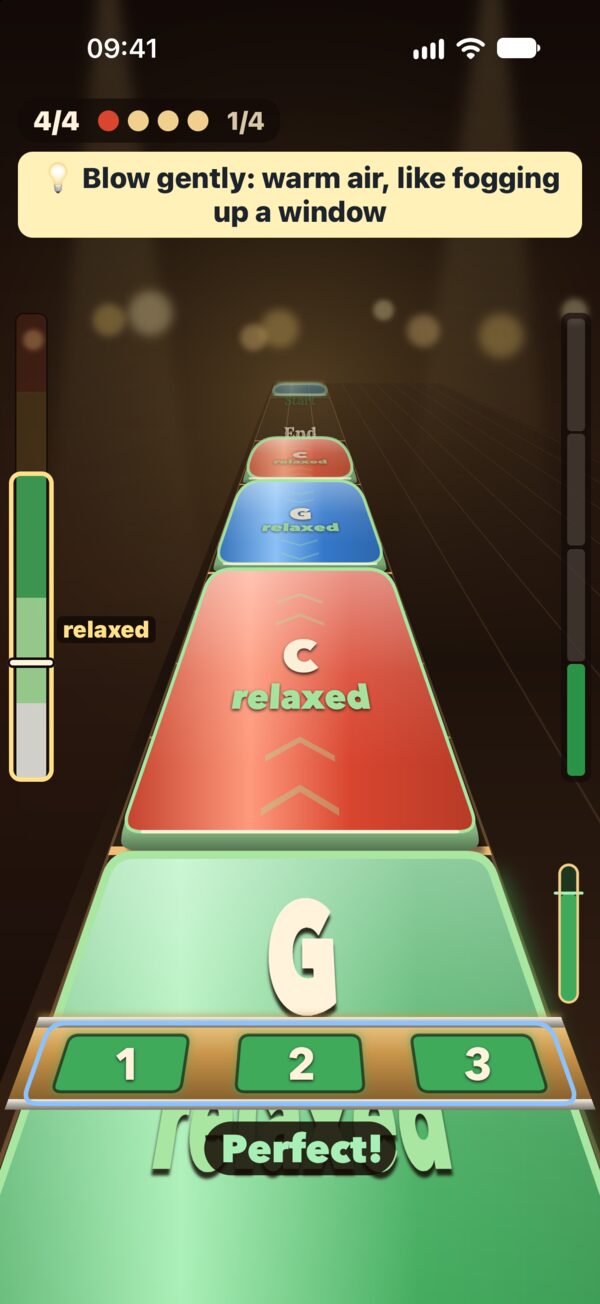
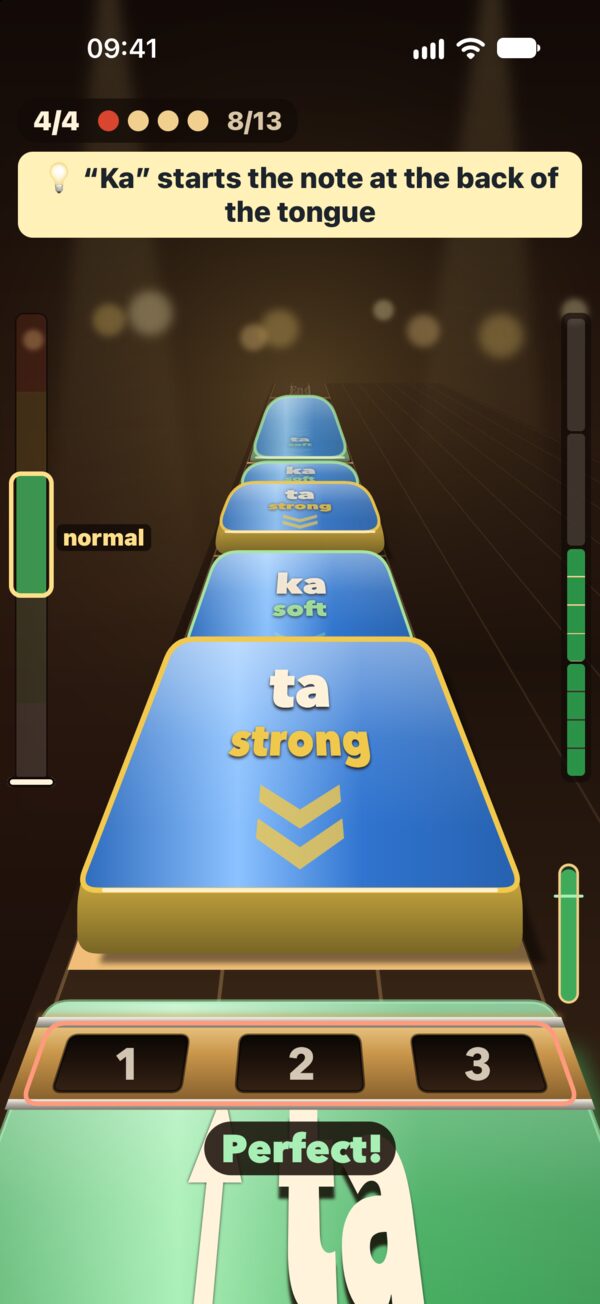
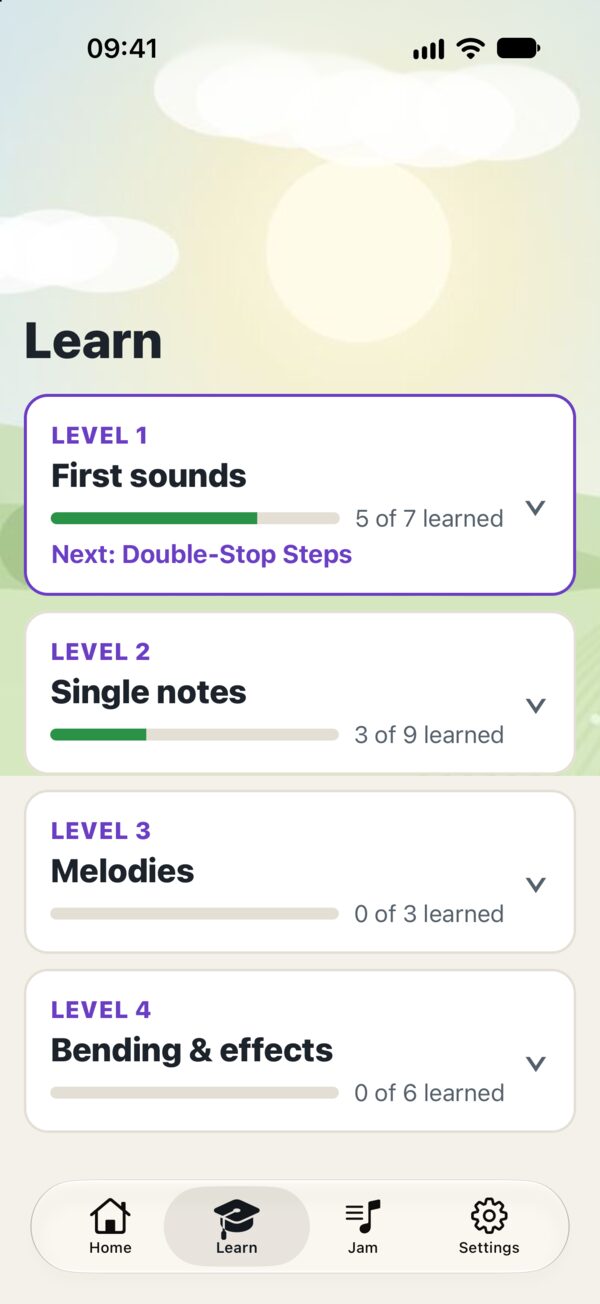
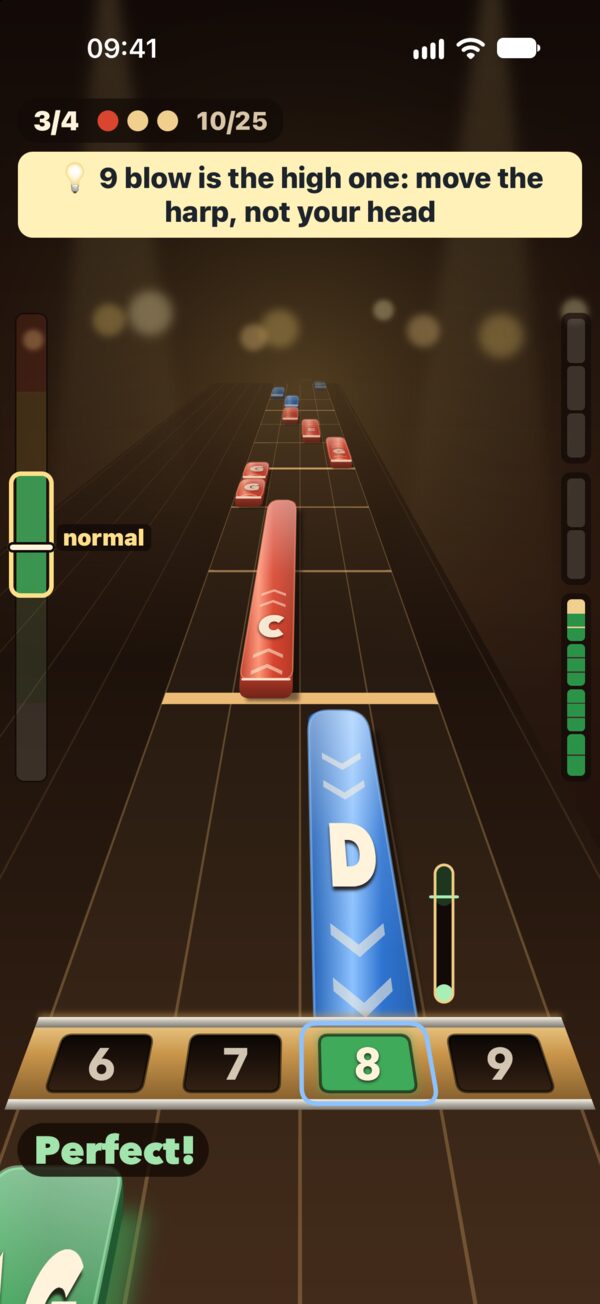
Your first minutes
- Take the tour. It opens the first time you start HarpJam and takes about two minutes: getting ready, how the road works, and the levels. You can see it again under Settings › Tour of HarpJam.
- Try your harp. Blow and draw a few chords with no tempo, and check that HarpJam hears you.
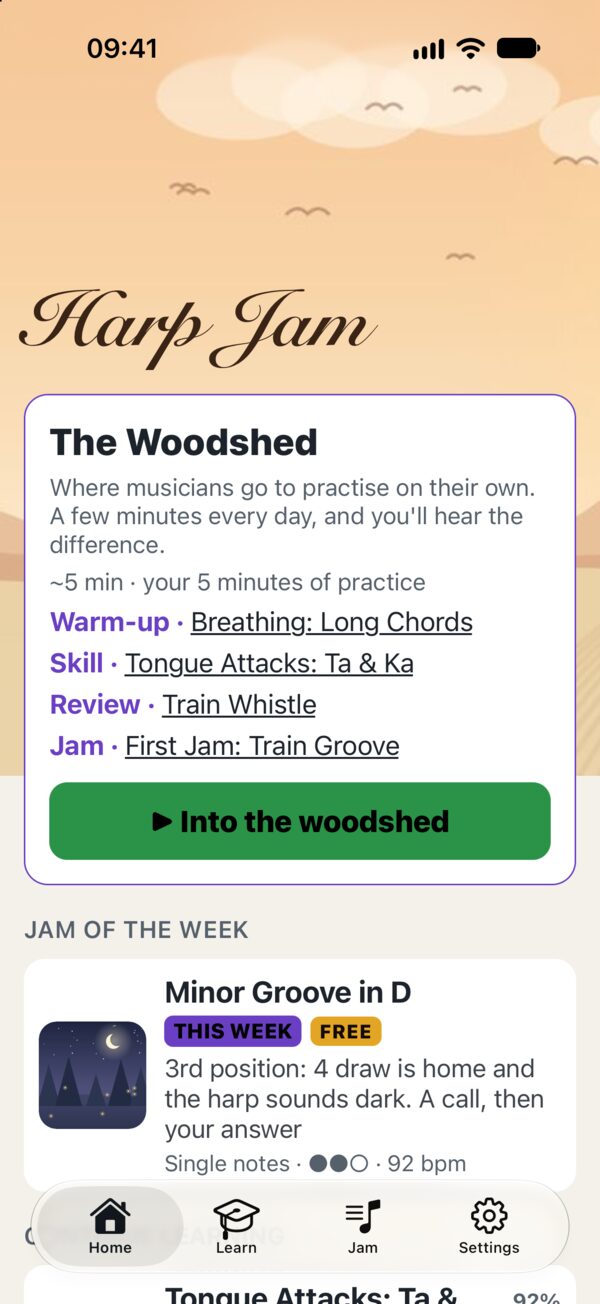
- Into the Woodshed. On Home, the Woodshed plans a few minutes of practice for today: a warm-up, a skill, a review and a jam.
- Then explore. Learn takes you level by level, from first sounds to bends. Jam has songs with the band where you play along and then play freely.
Before you play
Which harmonica do I need?
A 10-hole diatonic harmonica in the key of C (the most common kind, often called a "blues harp"). Every lesson and jam in HarpJam is written for a C harp.
How does HarpJam know what I play?
It listens through your phone's microphone and works out, on the phone, which hole you play, whether you blow or draw, and how hard. Nothing is sent anywhere: the only recordings are your latest and best run of each song, kept on your phone for the replay. Allow microphone access when HarpJam asks. If you said no by mistake, turn it on again: on an iPhone in Settings › HarpJam › Microphone, on Android in Settings › Apps › HarpJam › Permissions › Microphone.
When something feels off
My notes aren't recognised
- Run Settings › Calibrate harp once: it takes about ten seconds and tunes HarpJam to your harmonica and room.
- Play in a quiet room, with the phone about an arm's length away and the microphone facing you.
- Open Settings › Detection lab to see live what the app hears: the hole, chords, strength and bends.
Notes count too early or too late
Bluetooth headphones and speakers add a delay. Use Settings › Timing (delay) to measure and correct it, or play through the phone's own speaker.
Strong and soft notes ("ta" and "ka") are too hard
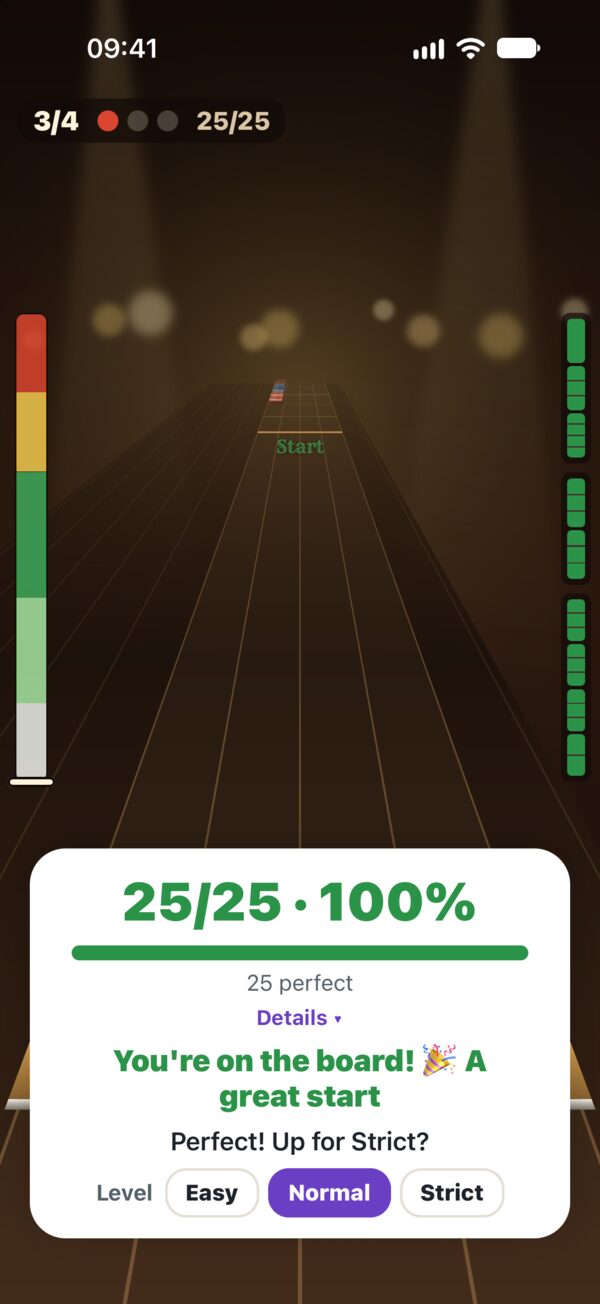
Pick the Easy level, in the box after each pass or under Settings › Level. Easy is kind: notes a bit early or late, or at the wrong strength, still count if they're close. In Settings › Strength (ta & ka) you can also measure your own normal level.
The song is too fast
Tap the sliders button while playing and slow it down, all the way to a quarter of the speed. You can also loop one part of a song until it sits.
A note sticks or goes quiet
A reed can stick with moisture or a crumb, most often after a long session. Tap the harp out against your palm (holes down) and play the note firmly a few times. If one hole keeps going quiet while the others sound, HarpJam says so after the pass. See Looking after your harp.
Watch a run again
It's hard to catch everything while you play. Tap the clock button at the top of the song (or Watch the replay after a run) to see your latest or best run on the road again, with its sound. Each note shows whether it counted: green with a ✓ if it did, faded with a red ✗ if it didn't. Amber stripes on a note show where HarpJam heard something else, and holes you played where no note asked for them show as amber bars in their lanes. Drag the road up and down to move back and forth. A red REC mark on the road shows when a run is being recorded; turn it off with Settings › Save replays.
Start over
Settings › Reset progress & history clears your scores, history and replays. Your calibration and timing are kept. To start over on just one song, open it, tap the sliders button and choose Reset this song's results at the end.
Looking after your harp
Moisture and crumbs are what make a harp clog up. A few habits keep it playing well for years.
Every time you play
- Rinse your mouth or drink some water first, and don't play right after eating or drinking anything sweet.
- Warm the harp in your hands or pocket for a minute. A cold harp gathers moisture that makes reeds stick.
- Tap it out when you're done: holes down, tap it firmly against your palm a few times, then turn it and tap again.
- Let it dry in the open, holes up, before it goes back in its case.
When a note sticks while you play
Tap the harp out against your palm and play the note firmly a few times; it usually comes back. Don't force it with hard blasts: a reed that is stuck with moisture frees itself, but a bent one goes out of tune.
Cleaning now and then
- A harp with a plastic comb can be rinsed briefly under lukewarm (never hot) water. Tap it out well and let it dry fully, holes up.
- A harp with a wooden comb should not be rinsed: the wood swells. Tap it out and wipe the cover plates instead.
- For a deeper clean, unscrew the cover plates and wipe the comb and covers. Leave the reeds alone, or touch them only very gently.
- No soap on the reeds, and never a dishwasher.
If the same hole keeps sticking or never sounds clean however you play it, that reed may be the problem, not you. Budget harps vary. A second C harp helps you tell: if the problem stays with the harp, it's the harp.
Fun facts about the harp
Why "harp"?
Harmonica players have long called it a "harp", short for mouth harp or French harp, and Hohner's Blues Harp model made the name stick. The word harmonica itself is borrowed: it was first the name of Benjamin Franklin's glass armonica, an instrument of spinning glass bowls.
Who invented it?
The idea of a free reed, a thin tongue of metal that vibrates in a slot, is thousands of years old and comes from the Chinese sheng. Small mouth-blown reed instruments appeared in Germany and Austria in the 1820s, and around the same time a Bohemian instrument maker known as Richter laid out the 10 holes with blow and draw notes the way your harp still has them. From 1857 Matthias Hohner in Trossingen began making harmonicas by the million.
Built for waltzes, broken by the blues
Richter tuning was made for simple folk melodies in the harp's own key. In the American South, blues players turned it around: they played a C harp in G ("cross harp" or second position), with the draw notes at home, and bent those notes down to get the blue notes in between. In the 1950s Chicago players cupped the harp against a microphone and played it through an amplifier, and the harp got the sound you hear in blues and rock today.
What is a position?
A position is the note you treat as home. The harp stays the same, but starting and ending your phrases on a different note changes both the key and the mood. Positions are counted in fifths from the harp's key, so on a C harp:
- 1st position (straight harp): C major. Home on 1, 4 and 7 blow. Bright and simple: folk songs, children's songs, Christmas tunes.
- 2nd position (cross harp): G. Home on 2 draw (or 3 blow). The draw notes carry the music and bend, which is why it's the position of blues, rock and country.
- 3rd position (slant harp): D minor. Home on 1 and 4 draw. A minor sound that suits minor blues, funk and Celtic tunes.
That's also why blues players pick a harp a fifth below the song: a blues in G is played on a C harp, a blues in E on an A harp.
Scales on a C harp
In harmonica tab, a number is a hole you blow, a minus sign means draw, and each ' is a half step of bend: -3' is hole 3 draw, bent a half step.
- C major (1st position): 4 -4 5 -5 6 -6 -7 7. Mind the switch at the top: hole 7 is draw then blow.
- G major pentatonic (2nd position): 6 -6 -7 -8 8 9. Five notes that always sound good over a blues in G.
- G blues scale (2nd position): -2 -3' 4 -4' -4 -5 6. It needs two bends, and they're the sound of the blues.
- D minor, Dorian (3rd position): -4 5 -5 6 -6 -7 7 -8. No bends needed.
- A natural minor (4th position): -6 -7 7 -8 8 -9 9 -10. High and clean, no bends.
Three octaves in your pocket
From hole 1 blow to hole 10 blow is exactly three octaves. Some notes are missing on the way, but with bends, overblows and overdraws a master can play every half step from bottom to top.
You play it breathing in
The harmonica is one of very few wind instruments that sounds both when you blow and when you draw. Each hole has two reeds, one for each way of the air: 20 reeds in a 10-hole harp. In the blues, the draw notes do most of the work.
Chords come first
It's one of the few instruments where a chord is easier than a single note: breathe through three holes and the harp plays a chord that fits. That's why Learn in HarpJam starts with chords before single notes.
Your mouth is part of the instrument
A harp on its own is small and thin-sounding. Your mouth, throat and chest are its sound box, like the body of a guitar: they make it louder and warmer. Move your tongue and jaw, as if saying "ee" and "oo", and the tone goes brighter and darker. Cup your hands around the harp and open them for a "wah".
Bending: a trombone in your mouth
When you bend a note, the reed doesn't change. You change the shape of your mouth with your tongue, and the note slides down, a bit like a trombone slide, but only downwards and only so far. That's why bending takes practice, and why the Detection lab is the place to try it.
Overblows and overdraws
Bends can only go down, so a few notes are still missing. Masters find them with a trick: in holes 1 to 6 they blow while shaping the mouth so the blow reed goes quiet, and the draw reed sounds instead, a half step above its usual note. That's an overblow. In holes 7 to 10 the same trick on a draw is called an overdraw. Together with bends, they fill every gap and make the little diatonic fully chromatic. It's an advanced skill.
Diatonic or chromatic?
The 10-hole harp you play in HarpJam is a diatonic: it has the notes of one key, and you pick a harp for the key you want. A chromatic harmonica has a button on the side that raises every note a half step, so it has all the notes in every key. It's the harmonica of jazz and classical music. The diatonic is the one for blues, rock, folk and country: it's simpler, cheaper, and it bends much more easily.
Why a C harp?
C sits in the middle of the range: low harps sound deep but need more air and control, high harps sound shrill and their bends are tight and hard to hit. Most lessons, tabs and songbooks are written for C, and it's the easiest key to find in any music shop. Once you can play a C harp, you can play a harp in any key: the holes, breaths and bends are the same.
The first music in space
In December 1965 astronaut Wally Schirra took out a small harmonica on board Gemini 6 and played "Jingle Bells", with Tom Stafford on little bells. It's often called the first music played in space.
Playing safely
Playing harmonica means deep, repeated breathing. If you feel dizzy, light-headed or short of breath, stop and rest. If you have a heart or lung condition, ask your doctor before practising.
Tell us your HarpJam version: it is at the bottom of Settings in the app (or tap Email support there, and it is filled in for you).